
Buying your next Houston home before selling your current property can create a timing and…
Construction Loans in Houston: Financing a Custom Home From Lot to Completion
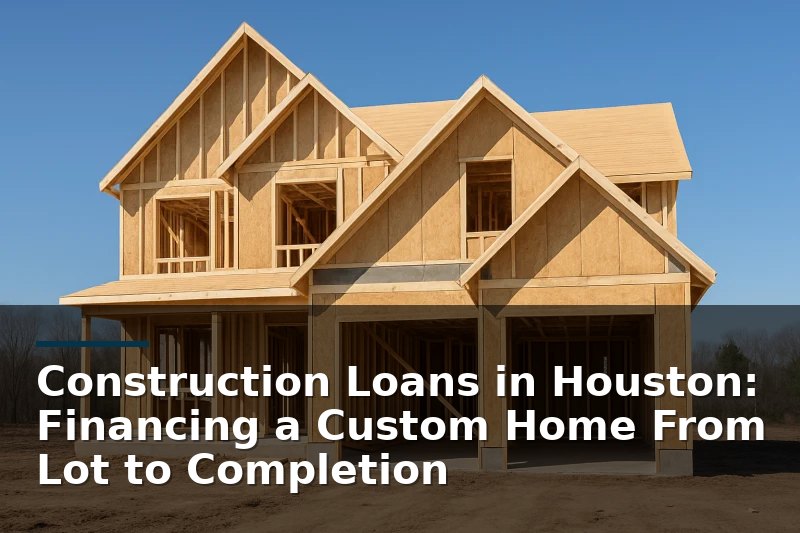
Building a custom home in Houston can be exciting, but coordinating the lot, builder, construction budget, and permanent financing can feel overwhelming.
A construction loan is short-term financing used to purchase or refinance a lot and fund construction costs through scheduled draws, with permanent mortgage financing arranged either at the beginning or after the home is complete.
This guide explains how construction loans work, what lenders review, and how to plan the financing from the lot purchase through final completion.
Key Takeaways
- Purpose: A construction loan can finance eligible land costs, labor, materials, permits, and other approved expenses required to build a custom home.
- Requirements: Lenders typically review the borrower, builder, plans, specifications, budget, appraisal, and construction schedule.
- Funding: Construction funds are generally released in draws as verified work is completed.
- Timeline: Approval and closing may take several weeks, while construction commonly takes many months depending on the project.
- Best For: This financing is generally used by qualified borrowers building a primary residence, second home, or eligible investment property.
Quick Answers
- Can a construction loan include the lot? Often, yes. The loan may finance an eligible lot purchase, refinance land already owned, or use documented land equity as part of the transaction.
- Do payments begin during construction? Typically, yes. Payments are often based on the amount drawn rather than the full approved loan amount, but terms vary.
- How are construction funds released? Funds are released through draws after the lender confirms that specific stages of work have been completed.
- Can I select my own builder? Usually, but the builder must meet the lender’s experience, licensing, insurance, and financial requirements.
- Is the permanent mortgage arranged before construction? It can be. A one-time-close loan combines construction and permanent financing, while a two-time-close structure requires a second closing.
I am Juan-Carlos Sotomayor (NMLS# 2531334), Managing Principal and founder of Zynergi Capital. Based in The Woodlands, I help borrowers throughout the Houston metro and other Texas markets evaluate construction financing based on the property, budget, timeline, and long-term plan.
How a Houston Construction Loan Works
A traditional mortgage finances a completed property. A construction loan finances a property that does not yet exist in its finished form.
That difference affects nearly every part of underwriting. The lender must evaluate the borrower’s qualifications, but it must also determine whether the plans, builder, budget, and projected value support the request.
The process generally follows these stages:
- Initial financial review: The lender reviews credit, income, assets, liabilities, reserves, and the proposed occupancy.
- Lot review: The lender evaluates ownership, purchase terms, title, site conditions, and any existing debt against the land.
- Builder approval: The builder provides business information, insurance, licensing where applicable, references, and project history.
- Plan and budget review: Final plans, specifications, contracts, allowances, and cost estimates are reviewed.
- Appraisal: An appraiser estimates the home’s value subject to completion according to the approved plans and specifications.
- Closing and draws: After closing, funds are disbursed in stages as construction progresses.
- Completion: Final inspections, lien documentation, and occupancy requirements must be satisfied before the loan converts or is refinanced.
For a broader program overview, borrowers can review the Construction Home Loan page.
One-Time-Close vs. Two-Time-Close Construction Loans
The closing structure affects rate planning, documentation, costs, and the borrower’s exposure to changes during construction. Structure matters.
| Feature | One-Time Close | Two-Time Close |
|---|---|---|
| Closings | Construction and permanent financing are combined into one transaction. | The construction loan and permanent mortgage close separately. |
| Permanent Financing | Arranged before construction begins, subject to program terms. | Arranged closer to completion based on then-current qualifications and market terms. |
| Closing Costs | May reduce duplicate closing expenses. | May involve separate costs for each transaction. |
| Flexibility | Provides more certainty but may offer fewer options after construction starts. | Allows the permanent loan to be selected later, but approval is not assured. |
A one-time close may provide greater certainty because the permanent financing is established earlier. A two-time close may provide more flexibility if the completed property requires a different loan type, including a jumbo mortgage.
The tradeoff is qualification risk. With a two-time close, changes in income, credit, property value, rates, or lending guidelines may affect the permanent loan. The borrower should plan for that risk before construction begins.
What Lenders Review Before Approving the Project
Borrower Qualifications
Lenders commonly review credit history, documented income, current debts, available cash, and post-closing reserves. Requirements vary based on occupancy, loan size, property type, and the selected lending program.
Self-employed borrowers may need personal and business tax returns, financial statements, or other income documentation. Some borrowers may qualify through alternative documentation programs, but those programs have separate pricing, reserve, and down payment standards. Financing is not one-size-fits-all.
Builder Qualifications
The lender typically approves the builder separately from the borrower. This protects the project by confirming that the builder has relevant experience, appropriate insurance, and the capacity to complete the work.
Owner-builder transactions are more limited. Many lenders require an independent general contractor because construction administration, draw controls, lien management, and inspections create additional risk.
Plans, Specifications, and Budget
The construction documents should be detailed and internally consistent. Lenders commonly request architectural plans, material specifications, a signed building contract, a line-item budget, and a construction schedule.
Allowances for finishes, fixtures, appliances, and landscaping should be realistic. If allowances are too low, the borrower may need to contribute additional cash later.
A contingency reserve may also be required. This reserve addresses approved cost increases or unexpected construction expenses, but it should not be treated as an unrestricted source of funds.
How Construction Draws Are Managed
A draw is a controlled release of loan funds for work completed or materials supplied under the approved construction budget.
The lender does not usually provide all construction funds at closing. Instead, the builder submits draw requests at agreed milestones. An inspector then confirms the percentage of work completed before funds are released.
A typical draw schedule may include:
- Site preparation and foundation
- Framing and roofing
- Mechanical, electrical, and plumbing work
- Insulation and drywall
- Interior finishes and fixtures
- Final completion and required approvals
Changes to the plans or budget may require advance lender approval. Significant changes can affect the appraisal, available funds, and completion schedule.
Order. Discipline. Focus. Those principles matter during construction because incomplete documentation or unapproved changes can delay a draw.
How the Lot Affects the Financing
The lot is part of the lender’s collateral. Its purchase price, current value, existing liens, and suitability for the proposed home all affect the loan structure.
If the lot is already owned, documented equity may sometimes be credited toward the borrower’s required contribution. The amount depends on the current appraisal, acquisition history, existing land debt, and lender guidelines.
If the lot is being purchased at closing, the construction loan may include the acquisition. Some borrowers purchase land first and arrange construction financing later. That approach can provide additional planning time, but it may also create separate closing costs and carrying expenses.
For borrowers who need temporary financing between a property sale, lot acquisition, and construction closing, a Bridge Home Loan may be relevant. Qualification, repayment strategy, and available equity must be reviewed carefully.
Houston-Area Construction Considerations
Construction requirements can vary across Houston, The Woodlands, Spring, Conroe, Cypress, Katy, Tomball, Humble, and Magnolia. Permitting authorities, utility access, drainage requirements, flood-zone considerations, and deed restrictions may differ by location.
Before closing, the project team may need to address surveys, soil or engineering reports, septic or utility plans, homeowners association approvals, and applicable municipal or county requirements. The lender may also require builder’s risk insurance and other project-specific coverage.
These items matter because a construction loan is approved around a defined scope and schedule. A delay involving permits, utilities, engineering, or site preparation can affect both the budget and the draw timeline.
Costs and Risks to Plan For
Construction financing may include lender charges, appraisal and inspection costs, title expenses, insurance, interest during construction, and permanent financing costs. Exact amounts vary by lender and project.
Borrowers should also plan for expenses that may fall outside the approved budget, including upgrades, design changes, temporary housing, storage, moving expenses, and extended interest if the project runs longer than expected.
The primary risks include:
- Cost overruns: Labor, materials, or site conditions may increase the final cost.
- Construction delays: Weather, permitting, inspections, material availability, and subcontractor schedules can affect completion.
- Appraisal limitations: The completed value may not support every dollar spent on custom features.
- Qualification changes: New debt, reduced income, lower credit, or depleted reserves may affect permanent financing.
- Builder performance: Contractor delays or financial problems can interrupt the project.
Before moving forward, let’s look at the full picture. The lot, contract, budget, reserves, builder, and permanent loan should work together.
Preparing for a Construction Loan Review
A well-organized file helps the lender identify issues before they become expensive. I generally recommend gathering the following early:
- Income and asset documentation
- Current debt and housing information
- Lot purchase contract or proof of ownership
- Existing land loan statements, if applicable
- Final plans and specifications
- Signed builder contract
- Detailed construction budget
- Builder information and insurance
- Estimated construction timeline
- Funds available for closing, reserves, and unbudgeted expenses
Pre-approval planning should begin before the final construction contract is signed. Early review can clarify the target loan amount, documentation requirements, and whether the proposed budget fits the financing structure.
Review Your Construction Financing Plan
Every custom home project has different land costs, design requirements, timelines, and financial objectives. The right structure depends on more than the construction rate.
With more than 20 years of experience in real estate finance, development, and capital markets, I work to simplify the process and provide clear information at each stage. Residential mortgage lending is available in Texas and Florida through licensed channels, with other financing scenarios reviewed through a network of lending partners where available.
If you are planning a custom home in Houston or another Texas market, call, text, or email Zynergi Capital to review your scenario. I can help you compare closing structures, organize the pre-approval process, and understand the next steps before construction begins.
Frequently Asked Questions
Can land equity count toward my required contribution?
Land equity may count toward the borrower’s required contribution, depending on the current appraised value, acquisition history, existing liens, and lender guidelines. The lender will document the equity and determine how much can be credited to the transaction.
What happens if construction costs exceed the approved budget?
The borrower may need to use contingency funds or contribute additional cash before the lender releases further draws. Budget changes generally require documentation and approval, especially if they alter the plans, scope, or expected property value.
Can a self-employed borrower qualify for a construction loan?
Yes, a self-employed borrower may qualify if income, assets, credit, reserves, and the project meet the applicable guidelines. Documentation may include tax returns, business financial statements, bank statements, or other records depending on the program.
How is an unfinished custom home appraised?
The appraisal is based on the proposed home as if completed according to the approved plans and specifications. The appraiser reviews the lot, design, size, features, construction quality, and relevant comparable properties to estimate the completed value.
What happens if the home is not completed by the loan maturity date?
The lender may review an extension, modification, or other resolution, but approval and costs vary by lender and circumstance. Borrowers should communicate delays early and maintain sufficient reserves for additional interest, inspections, insurance, and related expenses.

About the Author
Juan-Carlos Sotomayor
Managing Principal at Zynergi Capital · NMLS #2531334
Juan Carlos Sotomayor brings more than 20 years of experience across real estate, lending, development, and capital structuring.
Specializes in: Investment Property Loans, DSCR Loans, Construction Loans
Licensed in: FL, TX
Related Posts